|
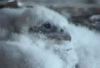
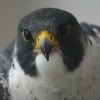
Update from Glenn on Marina & Haya
The injuries that delivered these birds into captivity--broken ulnas--are
healed. They are recovering now from the effects of longterm captivity (muscle
atrophy & feather damage), and it is yet to be known whether the healed bones,
and affected joints, are suitable to carry them back into the wild.
Post-operative care for injured wild raptors is crucial. One of the things we
became very good at during the peregrine population recovery, and recovery
efforts for other raptor species, was the development of techniques for
husbandry, housing, and handling of captive raptors. For a number of reasons,
this knowledge has not fully transferred to the rehabilitation community but I
am hoping--because of the opportunity presented by these two birds--to help with
that.
On the same day in mid-August that it was determined that Marina could be
released for falconry conditioning, I picked her up from the veterinary hospital
and began her handling and training. There was an inch or less of damage to the
tips of two or three primary feathers. Two and a half months later, no further
damage has occurred and she is a stronger falcon with a chance for release. Haya
suffered an infection at the site of her break and the ulna broke a second time
causing her longterm incarceration in housing that was not quite right. As a
result, all of the outer primary feathers are now badly broken making her
unreleasable in her current condition. I suggested light therapy to lengthen the
days beginning at Equinox (turning fall into spring to stimulate a molt) but it
was just not possible to make that addition in the aviary she inhabited at that
time. Ordinarily, the molt (feather replacement) occurs between April and
October. Using a falconry technique, "imping," it is possible to repair broken
feathers using the molted feathers from other birds but I would be reluctant to
try to repair all of the primary flight feathers on two wings--or at least the
outer five or six--because it is difficult to match nature's perfection on that
scale.
Marina flies quite well now but is not capable of strong, ascending flight. Her
flight is more symmetrical than it was but still not perfect. If you watched her
fly around an aviary or across a field you might think great, she's ready to
go--but she cannot fly like a peregrine. A complete review of her ten weeks with
me is available at a blog I created to update you all, and as a review for the
rehab community, at stewartfalcon.wordpress.com.
Rehabilitation is not a part of the mission of the Predatory Bird Research Group
but I feel compelled to make the rehabilitation of these two birds into an
opportunity for cooperation between my organization and rehabilitation
organizations in the Bay Area. Together we can contribute knowledge developed
principally by Tom Cade and Jim Weaver of The Peregrine Fund and Brian Walton of
SCPBRG to the very competent and dedicated medical personnel who repair injured
raptors so that we can successfully get injured birds back into the wild. I
think that we can develop appropriate housing, muscle- strengthening protocols,
and release methods that include falconry radio telemetry tracking so that we
know if we are being successful. People with the needed skills (falconry
handling and radio telemetry tracking) will be needed as volunteers and I look
forward to participating in their training. I am optimistic that it will all
come together. I have certainly been impressed with the level of professionalism
and dedication that I have encountered at Lindsay, Wildcare, and Peninsula
Humane where I have encountered raptor rehabilitators.
_________________
"The time to protect a species is while it is still common"
Rosalie Edge
Hawk Mountain Sanctuary Founder
|

 Login
Login Register
 FAQ
FAQ